|
$$PLAIN_TEXT_PREVIEW$$
Liberal versus Conservative: Navigating Theology and Practice in the Diocese of Masasi
|
|
Dear Subscriber First Name, This is the fourth article in a series reflecting on the findings of the December 2024 Masasi Survey. The survey—conducted across 11 parishes—provides valuable insights into how congregants in the Diocese of Masasi engage with scripture, social issues, worship practices, church authority, and mission. In this article, we explore the spectrum between liberal and conservative approaches to Christianity as reflected in the survey data, considering historical Anglican traditions and contemporary interpretations. The six articles in this series are: The Diocese in Historical Context Tradition and Modern Faith: Navigating Continuity and Change Episcopal versus Congregational: A Reflection on Church Leadership and Governance Liberal versus Conservative: Navigating Theology and Practice in the Diocese of Masasi (this article) Attitudes to Church Financing: Stewardship and Sustainability Faith and Belonging Across Communities
|
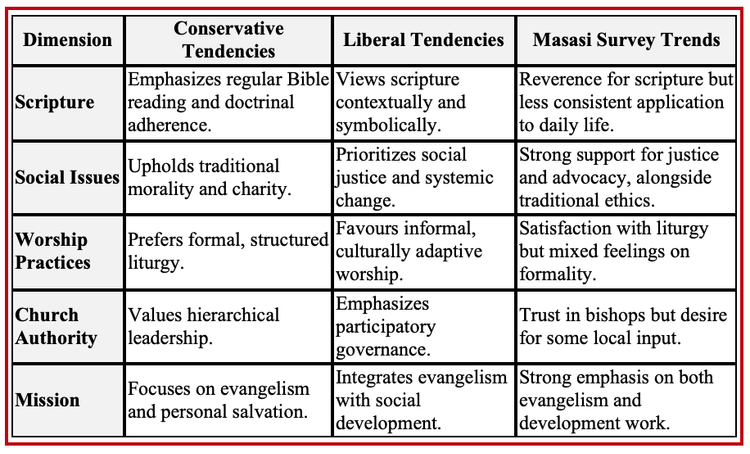
Introduction: Understanding Conservatism and Liberalism in the Anglican CommunionIn the Anglican Communion, conservative approaches emphasize traditional doctrine, liturgy, hierarchical authority, and a strong focus on personal salvation. Liberal approaches, by contrast, prioritize inclusivity, cultural adaptation, social justice, and personal interpretation of faith. Between these extremes lies the “broad church” ethos, which seeks to integrate elements of both traditions. The Masasi Survey reflects aspects of all these currents, creating a dynamic and evolving faith community. The table below provides an overview of the key dimensions explored in this article, summarising where the Diocese of Masasi tends to align based on survey results:
|
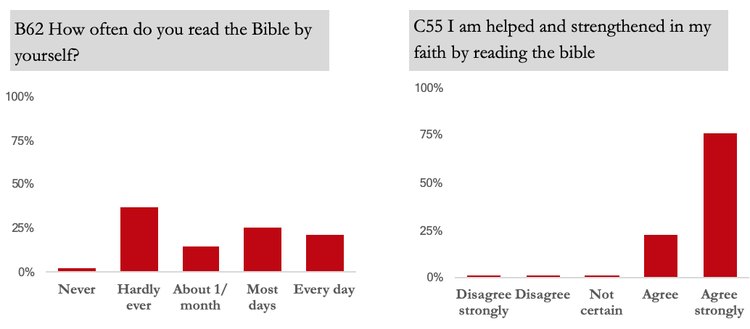
ScriptureConservative Anglicans view scripture as the inerrant Word of God, central to daily life and decision-making. They prioritise regular Bible reading and doctrinal continuity. Liberals, on the other hand, often interpret scripture symbolically or contextually, focusing on its moral and spiritual lessons rather than literal application. The survey responses suggest that the Diocese of Masasi holds a predominantly conservative view of scripture, with high regard for its spiritual authority. However, the less consistent application of Christian faith to daily life introduces a nuanced dynamic. The Masasi Survey reveals a nuanced relationship with scripture. While many congregants report finding strength in the Bible and engaging with it regularly, a significant proportion do not prioritise personal Bible reading.
|
|
This is a strange combination, since it might be assumed that respondents who are helped and strengthened in their faith by reading the bible would do so frequently if their faith is valuable to them. This indicates a community that reveres scripture as a spiritual resource but may not consistently integrate it into practical aspects of life. This would be supported by survey data suggesting that respondents’ Christian faith does not influence their daily lives.
|
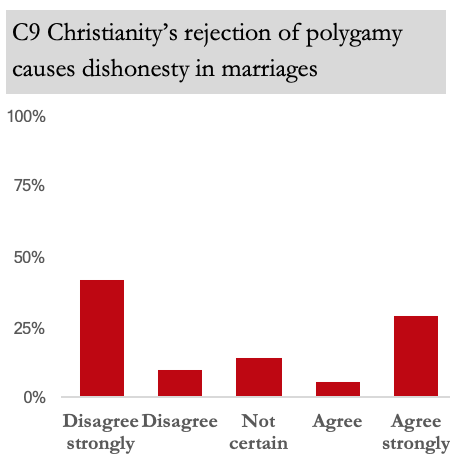
Social IssuesConservatives typically emphasize traditional Christian morality, including monogamy and charity, while liberals focus on systemic change and social justice, advocating for the church’s active engagement in societal reform. In Masasi, respondents largely supported traditional Christian ethics, such as the rejection of polygamy. At the same time, there was overwhelming agreement that the church should address poverty, advocate for justice, and prioritise education and healthcare. This balance reflects a broad church ethos where both traditional charity and progressive social engagement coexist.
|
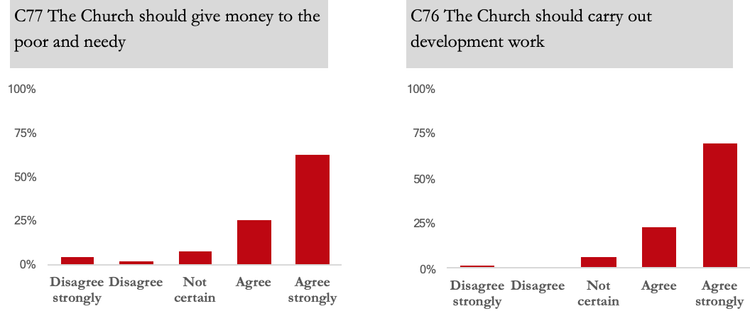
Responses to “Christianity’s rejection of polygamy causes dishonesty in marriages” reveal that while most congregants uphold traditional teachings on marriage, a significant minority see challenges in these teachings. Meanwhile, the Church’s responsibility to give money to the poor and needy and to carry out development work received strong support, reflecting a shared commitment to social justice and advocacy. |
|
|
|
|
These survey results indicate that the Diocese of Masasi leans toward a balanced approach, upholding conservative moral values while strongly engaging with liberal priorities of justice and systemic support. Though the latter are arguably a legacy of the Anglo-Catholic priorities of the United Missions for Central Africa, who founded the diocese.
|
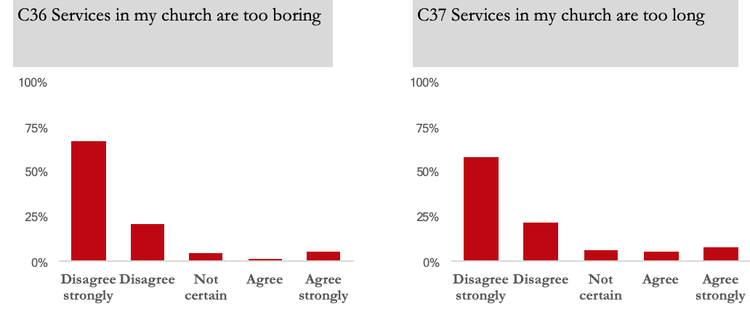
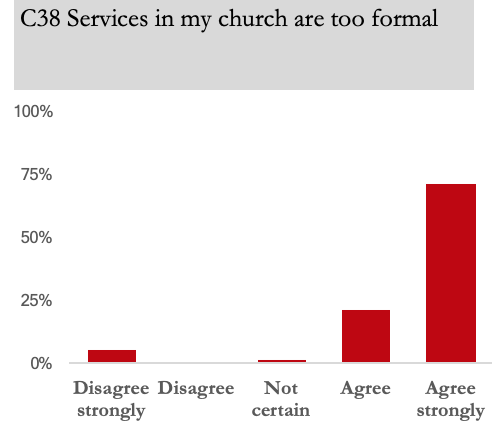
Worship PracticesConservative worship emphasises formal liturgy, reverence, and continuity with tradition. Liberal worship tends to be more flexible, innovative, and culturally adaptive, aiming to engage congregants in new and relevant ways. Survey responses showed general satisfaction with the length and structure of services, but there was notable agreement that services are “too formal.” However, this result may have been skewed by a mistranslation in the survey, where “too” was interpreted as “very,” losing its negative connotation. Many respondents appreciated sermons and moments of silence in services, highlighting the value of reflection and meaningful engagement.
|
The Swahili translation of services being ‘too formal’ can be interpreted to convey the opposite impression, of approval rather than criticism of the formality. If so, this would be consistent with a conservative appreciation of formal liturgy and continuity with tradition. |
|
|
|
|
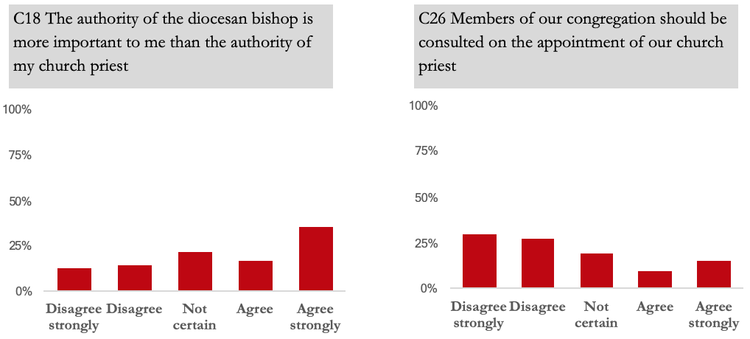
Church Authority: Hierarchical or Collaborative?Conservatives tend to prioritise hierarchical governance, trusting in the authority of bishops and clergy. Liberals often favor participatory decision-making, advocating for greater congregational involvement in leadership. In Masasi, trust in episcopal authority is strong, with most respondents affirming the bishop’s leadership. However, responses regarding congregational input on decisions, such as the appointment of priests, were more mixed. This suggests an appreciation for centralised authority tempered by a desire for collaboration. Survey InsightsSurvey responses to “The authority of the diocesan bishop is more important to me than the authority of my church priest” reflected general trust in hierarchical leadership. At the same time, responses to “Members of our congregation should be consulted on the appointment of our church priest” were more divided, with a significant portion disagreeing, highlighting nuanced perspectives on governance.
|
|
These findings highlight a predominantly conservative view of church authority in Masasi, with strong trust in the diocesan bishop’s leadership. However, the mixed responses on congregational input suggest a willingness to engage with more collaborative approaches.
|
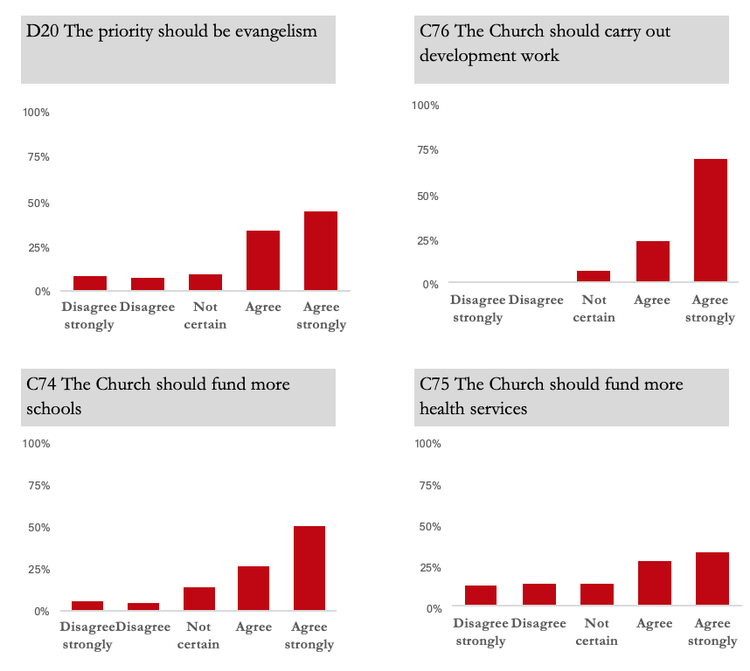
MissionConservatives prioritize evangelism and the expansion of the church, focusing on personal salvation and spreading the Gospel. Liberals emphasize holistic mission, integrating evangelism with social development and community support. The Masasi Survey reveals strong support for both approaches. Respondents widely affirmed the importance of evangelism while also prioritising the church’s role in funding schools, healthcare, and development projects. This reflects the historic priorities of the UMCA more than a liberal approach. Survey InsightsResponses to “The priority should be evangelism” and “The Church should carry out development work” show strong alignment with both traditional and progressive views of mission. Additionally, the high agreement with “The Church should fund more schools” and “The Church should fund more health services” highlights the diocese’s commitment to holistic outreach.
|
|
These responses demonstrate that the Diocese of Masasi exemplifies a broad church approach to mission, seamlessly integrating conservative priorities of evangelism with liberal commitments to social development.
|
Conclusion: A Spectrum of Faith and PracticeThe Diocese of Masasi exemplifies the richness of Anglicanism’s broad church tradition, balancing conservative and liberal elements across scripture, social issues, worship, authority, and mission. This diversity reflects the diocese’s ability to adapt to local needs while remaining connected to the wider Anglican Communion. As the series continues, the Masasi Survey offers a valuable opportunity to reflect on how faith communities navigate these tensions and harmonies, inspiring engagement and dialogue within and beyond the diocese.
|
|
Have you found this article interesting? Please let us know what you think here. And please do share this article with friends who might be interested. We you sent this email by a friend? Please subscribe so you can receive articles in this series and other news from our diocese directly.
|
|
|
|